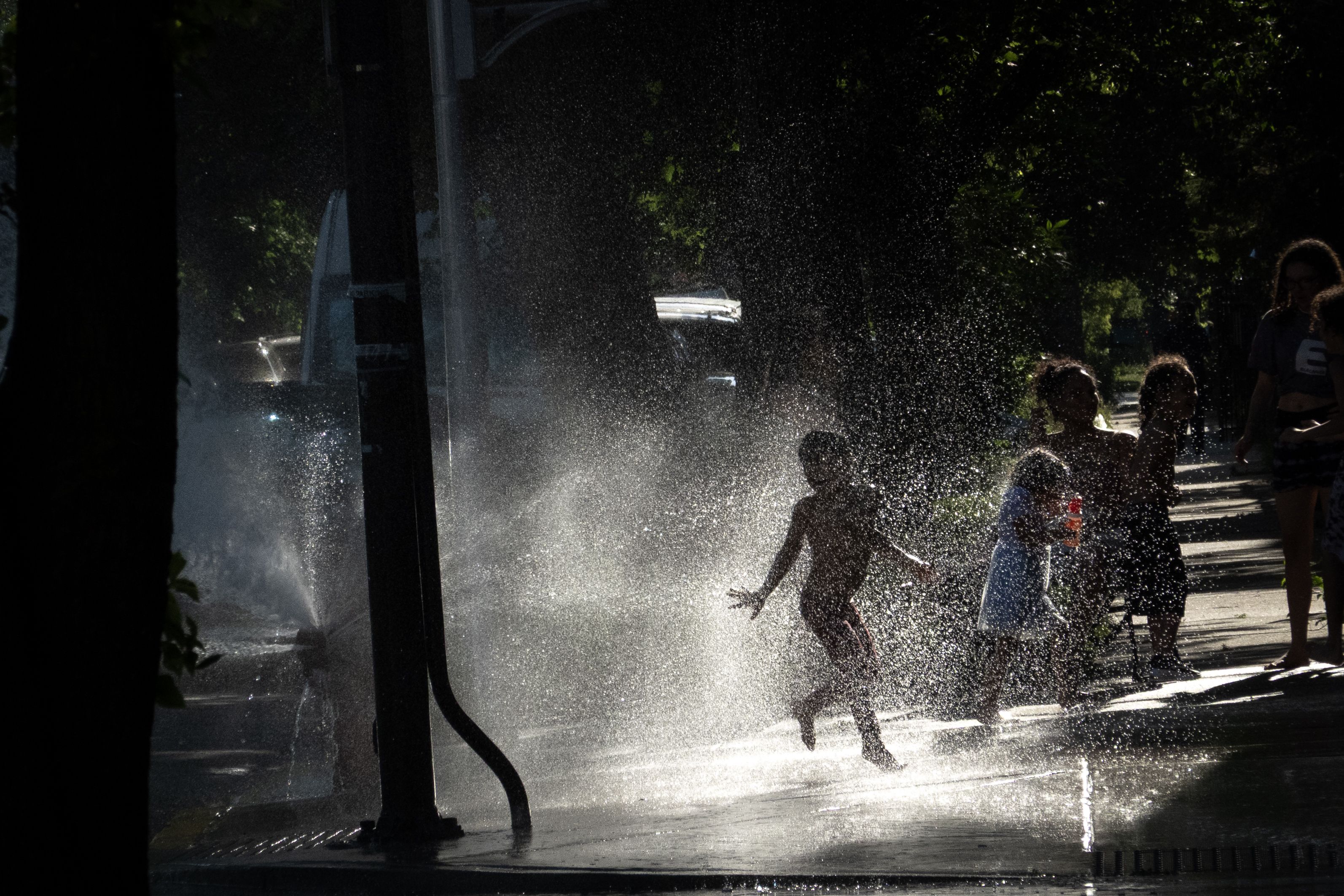
Chicago's post-1995 heat playbook faces a major test
An extended stretch of dangerous heat is testing the emergency response system Chicago built after the deadly 1995 heat wave.
Why it matters: Multi-day heat waves are especially dangerous because warm overnight temperatures prevent the body from recovering, driving up illness and deaths among vulnerable people.
The latest: Daily highs are expected to be over 90° through at least Friday, with heat indices reaching 105°.
Case in point: The 1995 Chicago heat wave, considered one of the deadliest in U.S. history, lasted five days and caused 739 heat-related deaths.
What they're saying: "Preparedness is key," the Illinois Emergency Management Agency's Theodore "Ted" Berger said in a release.
Zoom in: Cooling centers across Chicago have opened as the city has activated its heat response plan.
Flashback: After 1995, Chicago invested in trees, reflective roofs and other heat-mitigating infrastructure while requiring air conditioning in high-rise apartments.
The intrigue: One major failure in 1995 was the lack of communication between city agencies and residents. Today, the city has a comprehensive Heat Emergency Plan, coordinated through the Office of Emergency Management and Communications (OEMC), created after the disaster.
Of note: When extended heat waves hit Midwestern states like Illinois or Iowa, humidity from crops, sometimes called "corn sweat," can make the heat feel even more oppressive.
The bottom line: The legacy of 1995 means Chicago enters this heat wave far better prepared, but the coming days will show how well that playbook holds up against another prolonged stretch of dangerous temperatures.