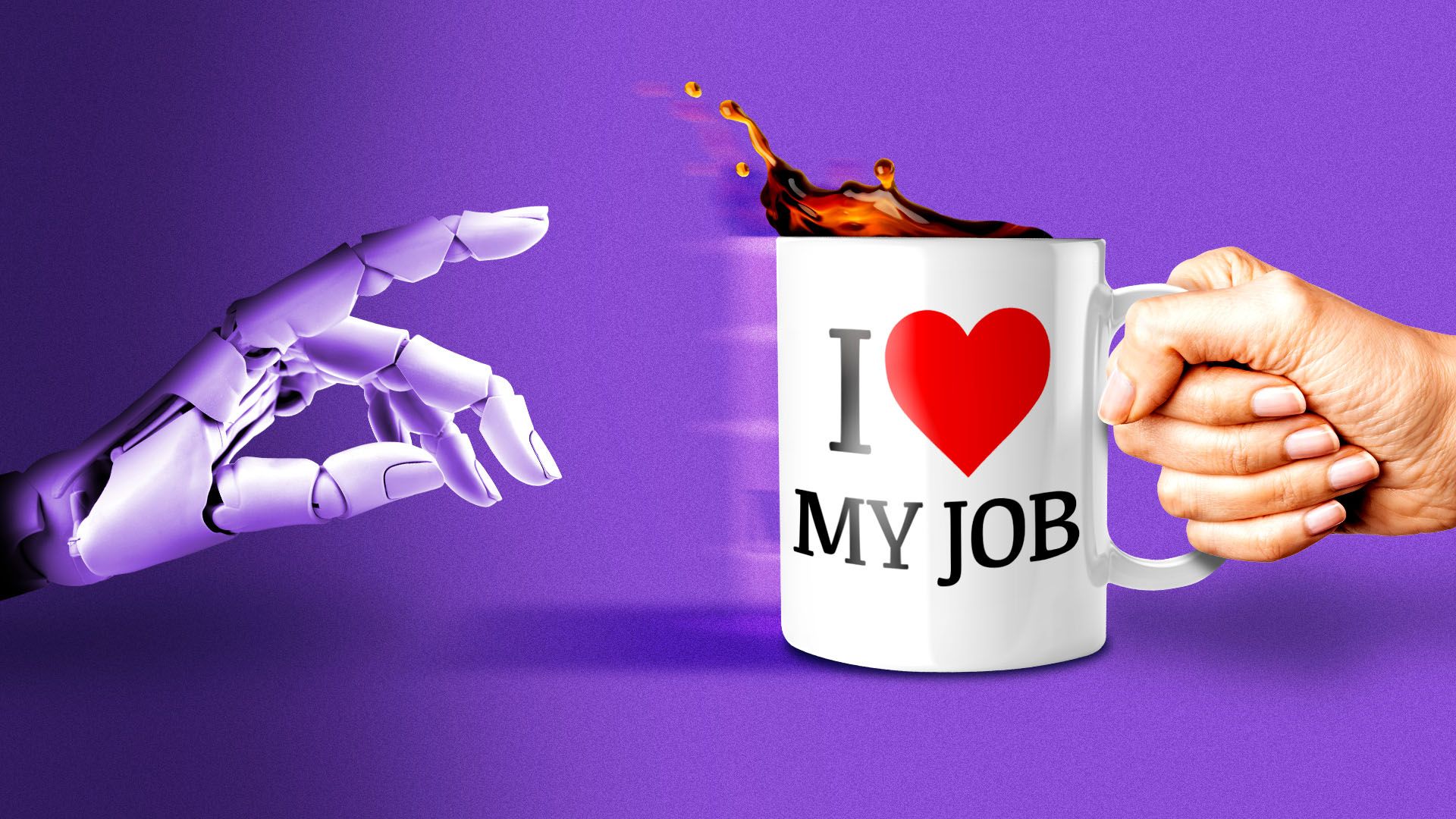
AI evangelists chill out on worker-bloodbath rhetoric
The AI executives who loudly warned about mass job loss may have been wrong, Zynga founder Mark Pincus told Axios in a conversation about his new book, "Life at the Speed of Play."
Why it matters: Several leading voices in Silicon Valley, including AI CEOs themselves, have softened their stance on AI-driven job loss.
The big picture: The softening rhetoric comes just before OpenAI and Anthropic are rumored to go public and also amid a surge in AI hate from consumers.
State of play: Pincus told Axios he doesn't buy "the doom and gloom that all the jobs are going to go away," mirroring the tone shift from AI's loudest evangelists.
Anthropic CEO Dario Amodei, who has warned of a white-collar bloodbath, recently said that falling AI costs could create new demand for workers amid an AI-driven productivity boom. OpenAI CEO Sam Altman said he and his executive team were right on their technological predictions but "pretty wrong" about the impact on white-collar work. Investors like Marc Andreessen, Chamath Palihapitiya and now Pincus have also argued AI will ultimately create more opportunity than it destroys.Public sentiment around AI has worsened and the industry's largest private companies are beginning to think about their relationship with public-market investors.
AI executives are increasingly speaking to multiple audiences: "It's part fundraising," Steve Dowling, co-host of the Communication Breakdown podcast, told Axios. "It's probably a little part ego, too."It's also a self-fulfilling prophecy: "When a tech executive says that in the future we will use AI for everything and everywhere, he's trying to get you to act in a way that will fulfill his vision of the future," philosopher Carissa Veliz said on TED Radio Hour.What they're saying: Pincus says part of the problem is the source: the people building AI are "so close to it... they lose perspective."
The same perspective problem Pincus points to of AI CEOs could apply to investors like himself: Pincus is an investor in SpaceX, OpenAI and Anthropic. His book includes a blurb from Altman, a foreword from LinkedIn co-founder Reid Hoffman, and several other stories from AI insiders and CEOs. Between the lines: Everyone from the executives at AI labs to entrepreneurs should treat AI less like a replacement and more like a sandbox, Pincus argues in his new book.
He's surprised more people aren't "getting deeply immersed" in AI, adding that "anyone who is really all in on AI is going to have a massive advantage" both within their company and in securing future jobs.He envisions AI reviving businesses like travel advising while enabling solo designers, consultants and other specialists to serve far more customers than before.Zoom in: AI is "so alluring" that it can "also be a bit of a trap," he said.
Rather than using AI to build their first idea faster, he argues founders should use it to test far more ideas before committing to one.AI should be used as a tool to challenge ideas, not something founders can turn to for validation of their initial instincts, he said. The bottom line: As the AI industry enters its next phase, it's worth considering not only what executives and investors are predicting, but also when they're making those predictions.