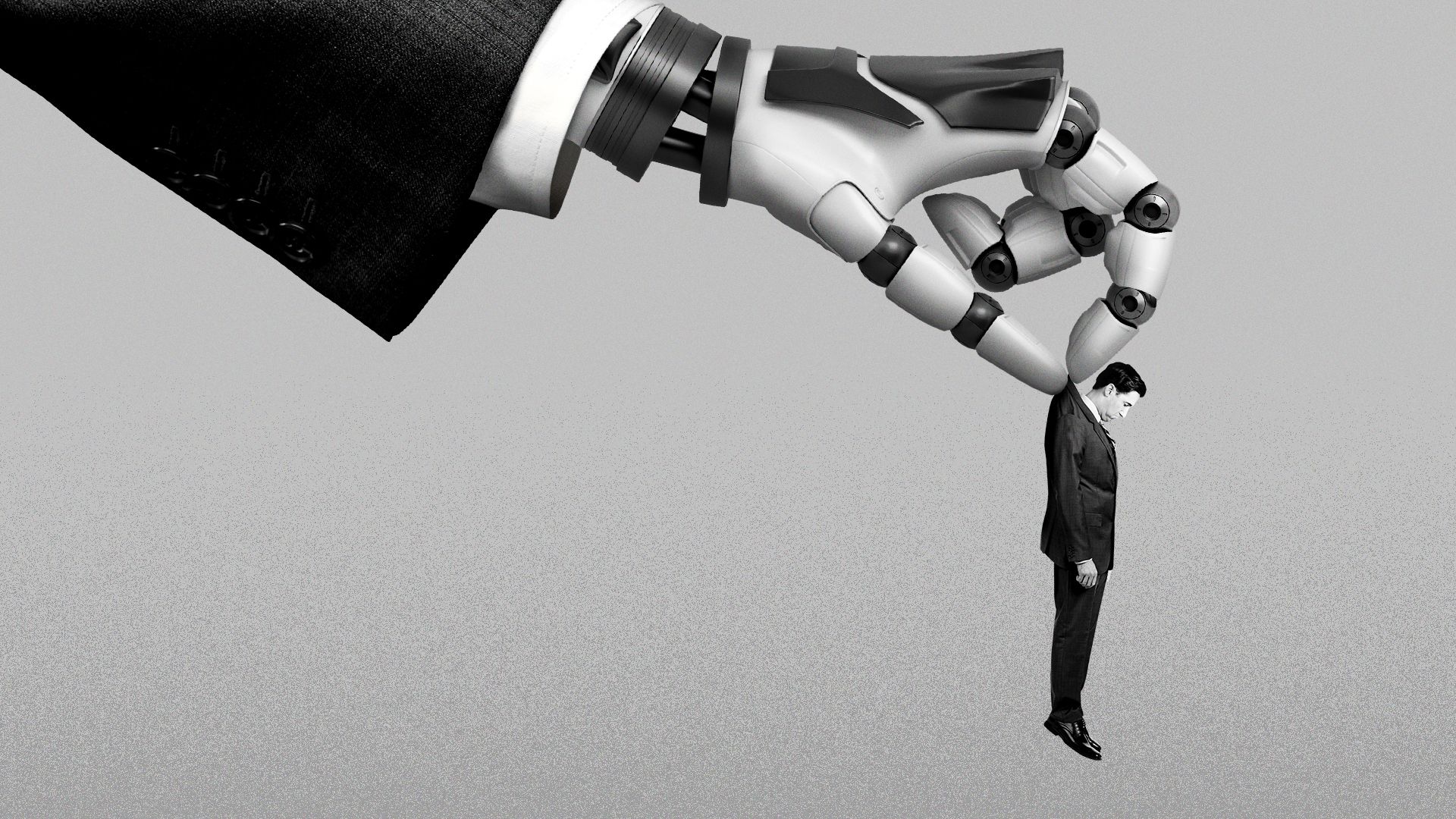
How California is preparing for AI workforce disruption
Gov. Gavin Newsom's executive order last month directing state agencies to study how AI is reshaping work reflects a growing challenge for policymakers: preparing workers for labor market changes as the technology accelerates and anxiety about job losses grow.
Why it matters: California is home to many of the world's leading AI companies, making it both a driver of rapid growth and a potential ground zero for any workforce disruption that follows.
State of play: Newsom has billed the order as a first-in-the-nation effort to help California get ahead of AI-driven workforce disruption through data collection, employment trend monitoring and worker safeguards like retraining programs and severance pay.
The big picture: AI adoption is rapidly spreading, but what it ultimately means for workers remains an open question.
The EDD has begun collecting and analyzing workforce data to identify whether losses are emerging and which occupations could be most exposed.
Between the lines: Newsom's order arrives amid growing public concerns over AI's economic consequences.
Occupations that could be affected include software development, manufacturing, health care, customer service and certain administrative roles.
The intrigue: While some employers may eventually need fewer workers for certain tasks, others are using AI to make employees more productive, rather than replace them altogether.