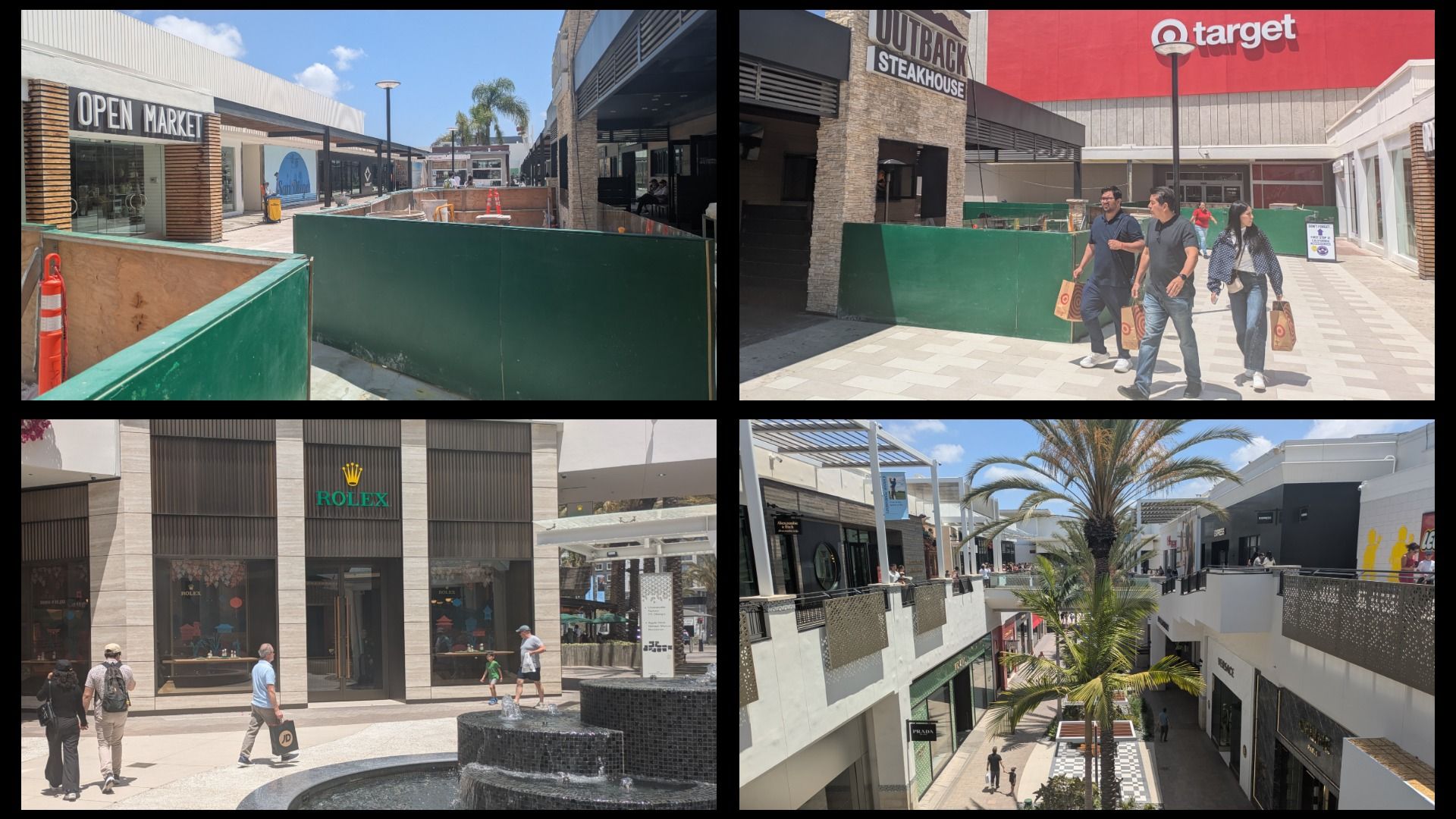
Why Fashion Valley and Mission Valley malls are so different
Fashion Valley and Mission Valley malls are less than a mile apart, but the shopping experience in them couldn't be more different.
Why it matters: The story of how these malls became so different shows the impact of luxury brand relationships, cross-border shoppers and how malls are handling post-COVID shopping habits.
Catch up quick: Both malls made pivotal changes in 2023 that sent them in differing directions.
Fashion Valley did a multimillion-dollar renovation to make it look fancier and attract higher-end retailers.
Designer everything at Fashion Valley. Photo: Claire Trageser/Axios
That same year, Westfield sold the Mission Valley mall to Retail Insite, which aims to convert the space into housing and public spaces, according to Fox 5.
Context: This split reflects a bigger wealth disparity in the country, Garrick Brown, vice president of real estate intelligence at real estate firm Galleli, told Axios.
"Forty years ago, mall tenancy was dominated by those mid-priced retailers selling mid-price goods to Americans," Brown said. "This shift is why so many malls have failed."
Claw Daddy at Mission Valley. Photo: Claire Trageser/Axios
The intrigue: Fashion Valley was always slightly higher end, with anchors like Nordstroms and Neiman Marcus, and that attracts luxury goods shoppers, including from Mexico.
By the numbers: Fashion Valley did $529.6 million in sales in 2025, with the average sale being $310.
What's next: The malls that have survived are either focused on luxury, or are pivoting to mixed-use concepts with big box and discount stores, Brown said.