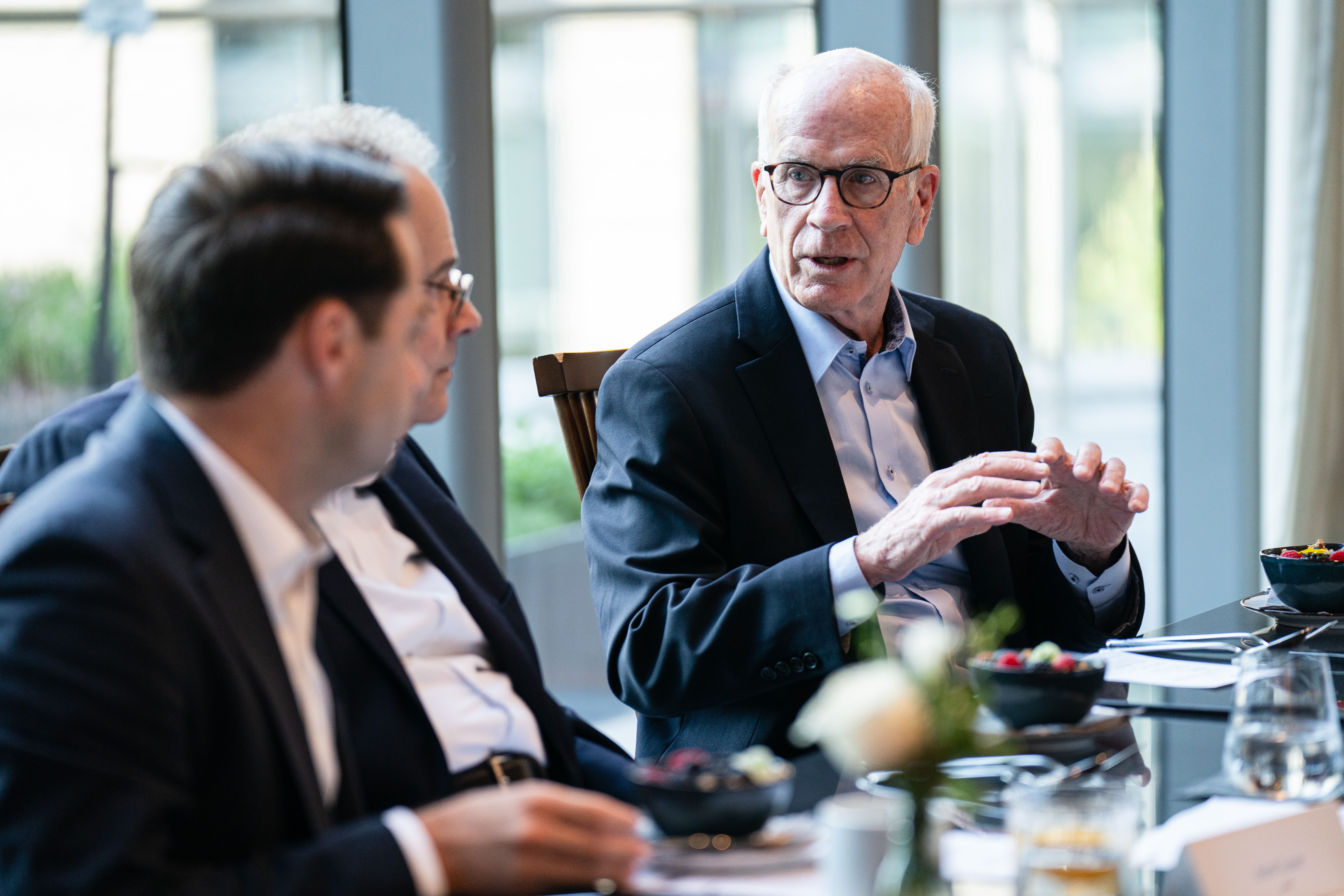
Axios Live: Biosimilars face barriers beyond science
WASHINGTON — Outdated incentives, patent disputes and gaps in public understanding are getting in the way of patients' use of biosimilars, said government and pharmaceutical industry experts at an Axios roundtable event.
Why it matters: Lowering health care costs is a priority for voters going into the 2026 midterm elections, and biosimilars are often chemically comparable, less expensive versions of name-brand medicines used in the treatment of cancer and other serious diseases.
Axios' Adriel Bettelheim and Brock Turner moderated the July 23 roundtable discussion. The event was sponsored by Sandoz.
5 big takeaways from the conversation:
"The biggest threat to [health care] access right now is cost," said Sen. Peter Welch (D-Vt.), and the potential savings associated with biosimilars shouldn't be blocked by other pharmaceutical companies hoping to make money.
"Made in America" is often "in conflict with an affordability agenda," said American Enterprise Institute senior fellow Alex Brill, and tradeoffs may be needed with the source of "safe, well-manufactured" drugs.
Using patents to block competition is a major obstacle in pharmaceutical innovation, said Rutgers Law School Board of Governors professor Michael Carrier. "There's no reason why a biologic manufacturer needs dozens or 100 or 150 patents."
Existing systems lean toward encouraging pharmacy benefit managers to prioritize brand drugs over consumer savings, said Christina Strogis, health policy and congressional affairs director of the ERISA Industry Committee.
A knowledge gap obstructs biosimilar adoption, AARP prescription drug policy principal Leigh Purvis said. "Consumers, a lot of policymakers [and] a lot of providers don't necessarily understand what biosimilars are."
Content from the sponsor's remarks:
In opening remarks, Sandoz CEO Richard Saynor said that biosimilars could be a significant savings opportunity for patients and payers in America.