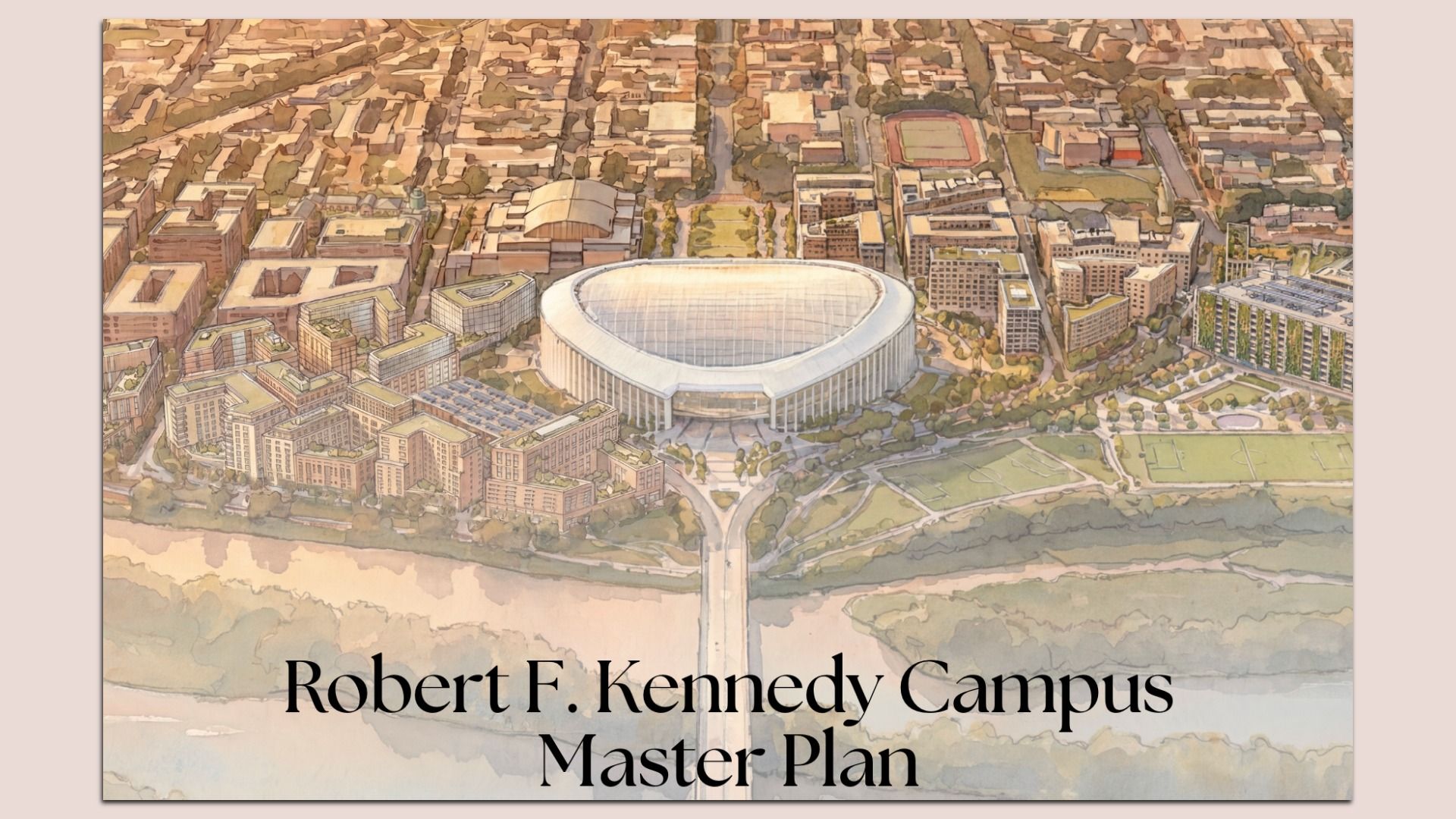
D.C. unveils sweeping master plan for Commanders stadium and RFK campus
Picture it: A crisp, autumnal Sunday, strolling through a farmers market in front of a swooping stadium with apartments rising around you and, farther off, riverfront residences.
Why it matters: It's the clearest look yet at how city leaders hope a $3.7 billion, classically inspired stadium for the Washington Commanders will transform the long-underused site into a new neighborhood.
The big picture: D.C.'s plan is to fill six districts with 5,000 to 6,500 homes, plus new businesses, recreation space and fan zones. It projects $4 billion in tax revenue over 30 years.
The fine print: Construction of the site's housing hit a setback last fall, as Axios reported, because zoning approval would take longer than expected, pushing back development of some parcels until the 2040s.
Here's a look at each mini-community on the 190-acre redevelopment.
The stadium pays homage to monumental Washington and the old RFK. Image: Courtesy of the DC Office of Planning
Stadium District
The 65,000-seat stadium is the site's anchor, set to open by fall 2030 and hold up to 200 events a year.
Image: Courtesy of the DC Office of Planning
Plaza District
A big piece of the neighborhood development will occur here, with about 2,200 homes spread across buildings up to 11 stories tall, stepping down the closer it gets to the neighboring rowhouse community.
Image: Courtesy of the DC Office of Planning
Riverfront District
Closer to the Anacostia, this 10-block span gets a "pedestrian-focused thoroughfare" called River Street, connecting gridiron to river.
Image: Courtesy of the DC Office of Planning
Kingman Commons
This community is expected to be more low key — residential and recreation-focused. Up to 1,300 homes are planned, with "affordability levels" meant for a "diverse range of households including workforce, family and senior living," plus a SportsPlex.
Image: Courtesy of the DC Office of Planning
Recreation District
Over 32 acres, D.C. plans to preserve the Fields at RFK, and existing surface parking lots will become new recreation facilities.
Image: Courtesy of the DC Office of Planning
Anacostia Commons
A trail here will take you closest to the river, where the District is considering water access for kayaking, boardwalk areas to watch wildlife, and picnic spots.
Read the full master plan