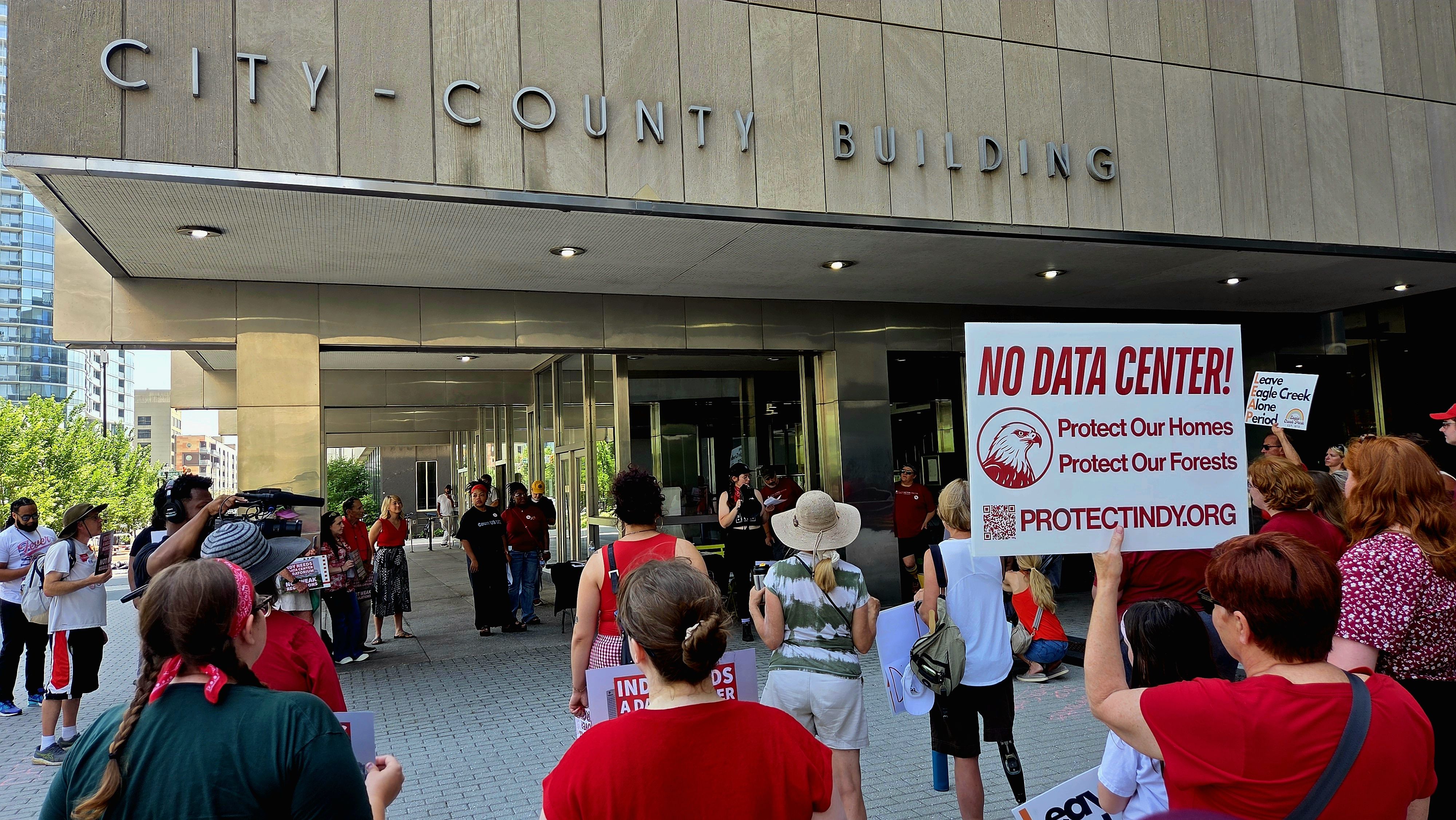
Proposed Indianapolis data center rules move forward amid protest
Indianapolis' first attempt to set uniform rules for data center development is moving forward despite passionate calls to hit pause on the process.
Why it matters: The city has approved multiple controversial data centers in the past few months with no dedicated zoning category governing them.
Zoom in: Following an hourlong protest outside and more than 90 minutes of discussion inside, the MDC approved the Department of Metropolitan Development's (DMD) proposed data center zoning regulations in a 5-3 vote, which drew loud boos and bursts of profanity from the crowd.
Here is some of what changed between the April draft and the advancing version.
🔊 Noise: The original cap was a general 65 decibels — comparable to a normal conversation or busy street — "at all hours" at the property line.
📏 Distance: The original buffer of 200 feet between a data center's main building and the property line of a "protected district" was extended to 400 feet.
📃 Annual reporting: The amended version adds the requirement of a formal annual compliance report and a public-facing online dashboard showing monthly electric and water consumption, peak use and generator testing dates.
Yes, but: Neither version applies retroactively to Indianapolis neighborhood data centers in the pipeline.
DMD director Megan Vukusich speaks during Wednesday's data center vote before the Metropolitan Development Commission.
The other side: Critics including City-County Councilor Jesse Brown said instead of creating guidelines, the city should be pursuing a moratorium, like the symbolic pause unanimously supported by the council in May.
What they're saying: Commission leaders stressed the importance of not delaying the vote for another month. But MDC member Brent Lyle suggested that slowing down was the right move.
What's next: The amended proposal will be introduced Monday to the full City-Council Council.
City-County Councilor Jesse Brown speaks during Wednesday's data center vote before the Metropolitan Development Commission.