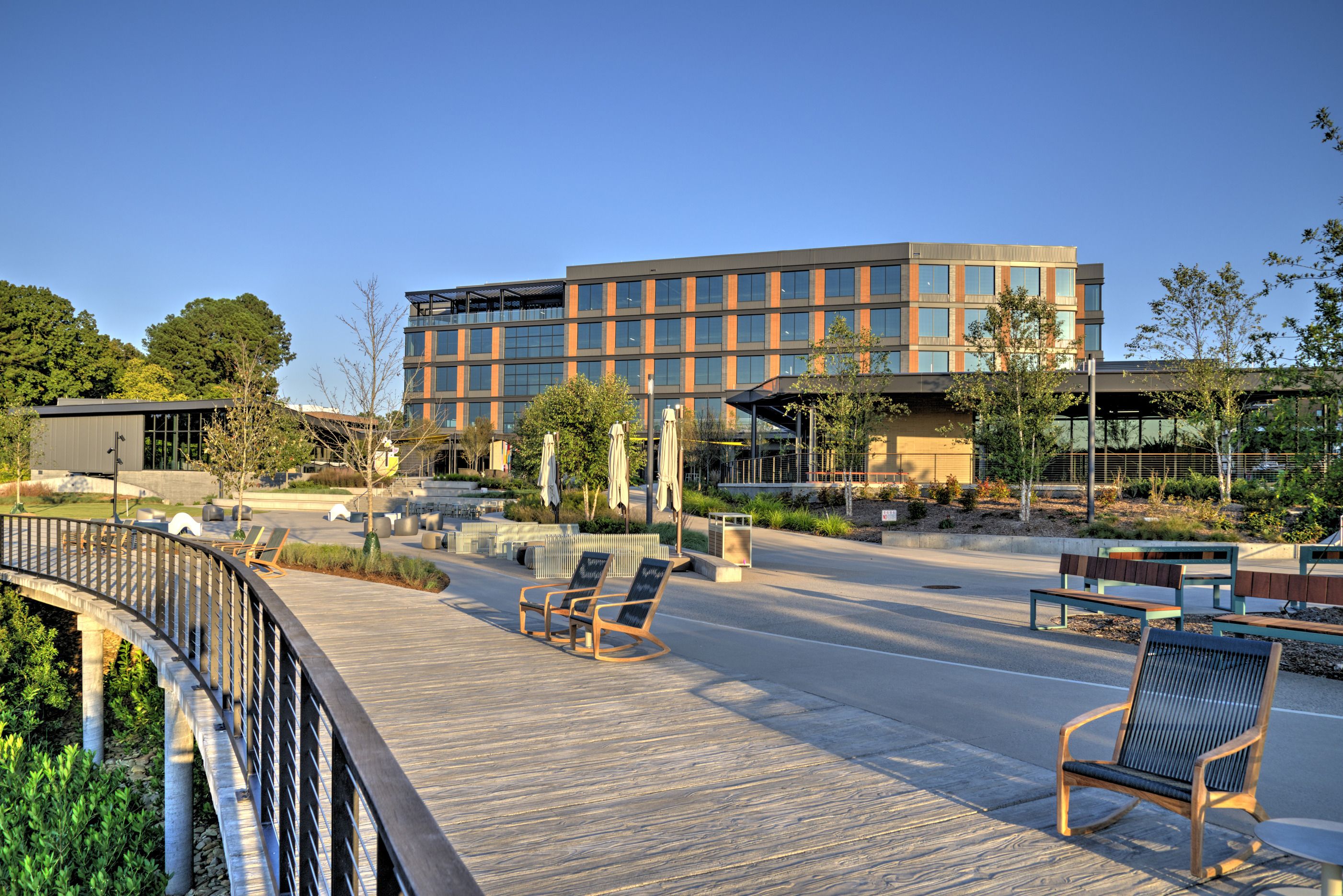
The RTP 3.0 era officially begins
A new era is officially underway in Research Triangle Park after the companies and landowners based in the 7,000-acre campus gave the final approval to its RTP 3.0 land rules.
Why it matters: The land-use changes, which had already been approved by Wake and Durham counties, could significantly change the built environment of the Triangle's most influential economic engine of the past six decades.
Nearly 400 companies are based in RTP, ranging from behemoths like IBM, Lenovo and Biogen to hundreds of startups. Driving the news: The new rules would give landowners much more flexibility on what they can build, like housing, retail and other commercial buildings for the first time.
Instead of a building surrounded by a large parking lot, for instance, a land owner can now build much more densely, adding apartments or other amenities. The park is hoping to focus this redevelopment around transit corridors that are coming to N.C. 54.It expands the concept that the Research Triangle Foundation, the nonprofit that manages the park, experimented with through its HUB RTP development. Between the lines: A motivating factor behind the changes is that the leadership of Research Triangle Park worried that the existing concept of RTP — a collection of walled-off corporate fortresses hidden behind trees — worked well for 50 years.
They were concerned it was becoming less attractive in the 2020s, as employees and companies sought more urban-feeling developments that were propping up across the country. Leadership from the Research Triangle Foundation studied competing innovation districts like Kendall Square in Cambridge, Mass., Eli Lilly's headquarters in Indianapolis and Westbrook Place in Vancouver, Canada, for inspiration. What they're saying: "Starting five years ago, coming out of COVID, our companies had a lot of concerns about talent attraction and retention," Travis Crayton, vice president of planning and public policy at the Research Triangle Foundation, told Axios.
"The places we create today look very different than they did in 1959," he added. "And this effort really has been about creating the right land-use framework that will allow the park to organically evolve over time to create more of those environments where talent really wants to be." What's next: Don't expect immediate changes, Crayton said. Landowners are still digesting the possibilities of the new rules.
But over the next 10 years, some major projects could get off the ground, creating more nodes of activity across RTP. The intrigue: There already is a lot of curiosity. RTI International previously told Axios it was studying what it could mean for the future of its campus on Cornwallis Road.
IBM has begun consolidating its employees and studying the future of its massive campus. It could also give flexibility to redevelop land if a large employer leaves — Lenovo reportedly is considering moving its HQ to the Lenovo Center redevelopment — or if one doesn't arrive at all. (Apple again delayed plans for its RTP campus last year.)