Nvidia CEO: How AI could actually create jobs
Nvidia CEO Jensen Huang thinks the artificial intelligence revolution is a wellspring of new jobs, rather than a labor market grim reaper set to bring on the employment apocalypse.
The big picture: Huang's optimism puts him at odds with the dire warnings of a white-collar bloodbath.
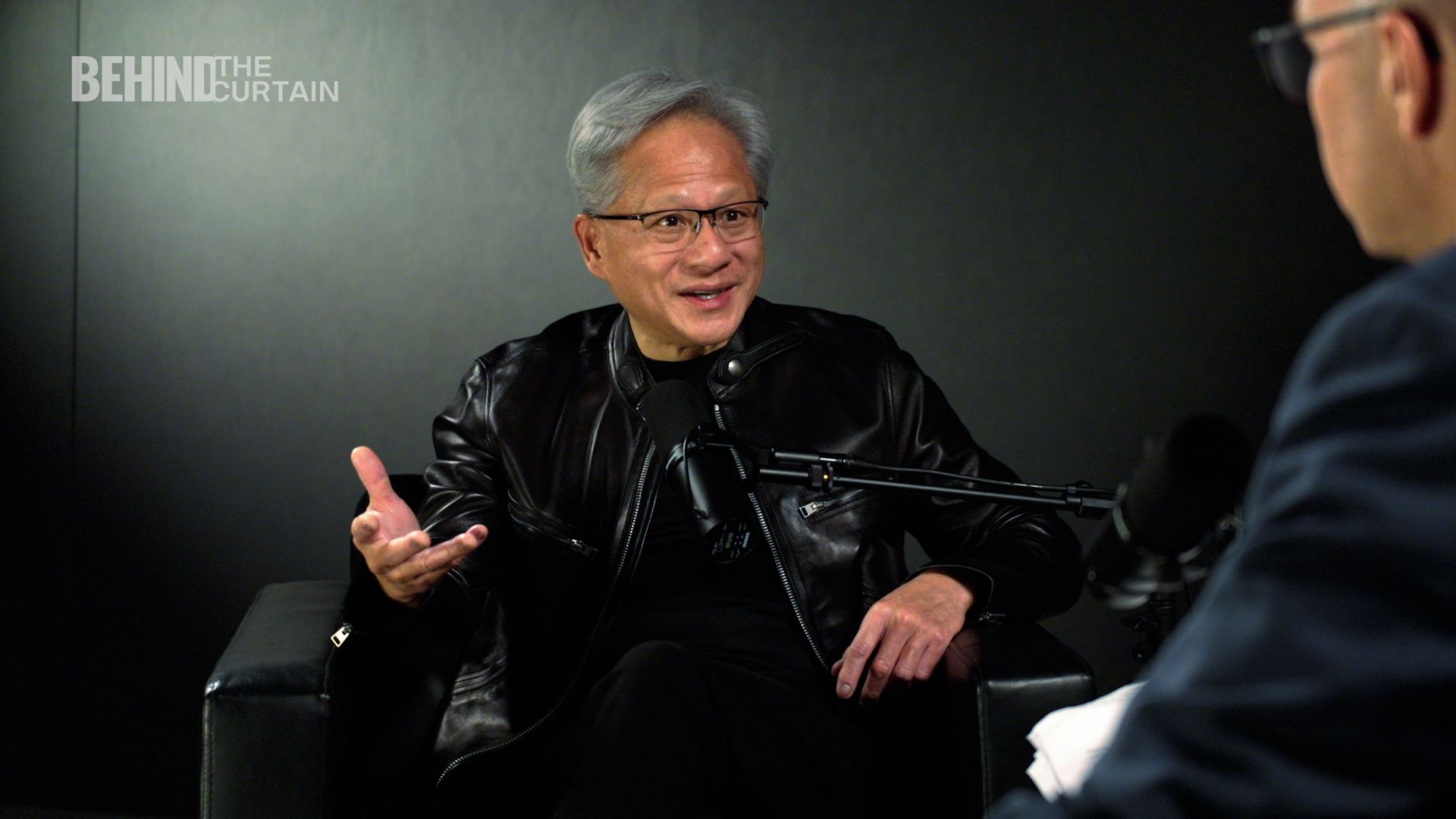
Driving the news: Huang shared his predictions on Axios' "Behind the Curtain" video series, saying it's "complete nonsense" that the tech could destroy "half" of American jobs.
In fact, AI will do the opposite of eliminating jobs, he tells Axios' Mike Allen: "While we're automating all of these different tasks, it's actually increasing the amount of jobs that the world needs."One practical industry example, Huang says, is radiology: AI tools can study scans, freeing up time for more patients and driving demand for human radiologists.Huang also cheered on the data center explosion as a catalyst for a manufacturing jobs.
While the construction and data center spending surge has boosted demand for some manufacturing sectors, overall manufacturing employment levels are still down from their post-pandemic peak.And many of those construction jobs are temporary. While data centers can boost local hiring, the centers themselves keep far fewer permanent workers.Reality check: Recent studies have shown that AI is bound to change the way people work, but so far, it's not replacing them en masse. That's not to say it hasn't caused some employment pain.
AI has been increasingly cited in layoff announcements — though some analysts say that's likely more about redirecting resources than automating gigs. And evidence does suggest that AI (or the anticipation of what it could eventually accomplish) could play a role in hampering hiring for young workers.In Goldman Sachs CEO David Solomon's words: "Will A.I. disrupt the labor market? Absolutely."
But he adds, "the United States has a long track record of creating new jobs in response to disruption, from the electrification of the 1900s to the digital revolution of the 1990s."The bottom line: Even the world's top chipmaker doesn't have a crystal ball.
The AI revolution is a story that's still being written. But Huang is adamant: that story isn't a sci-fi thriller, and the ending could be happier than AI doomers expect."We need to help people understand what AI is and what AI can do," Huang says, adding, "AI is creating an enormous number of jobs, not taking it away." Go deeper: Exclusive: Nvidia's Jensen Huang defends Chinese AI amid Kimi panic